
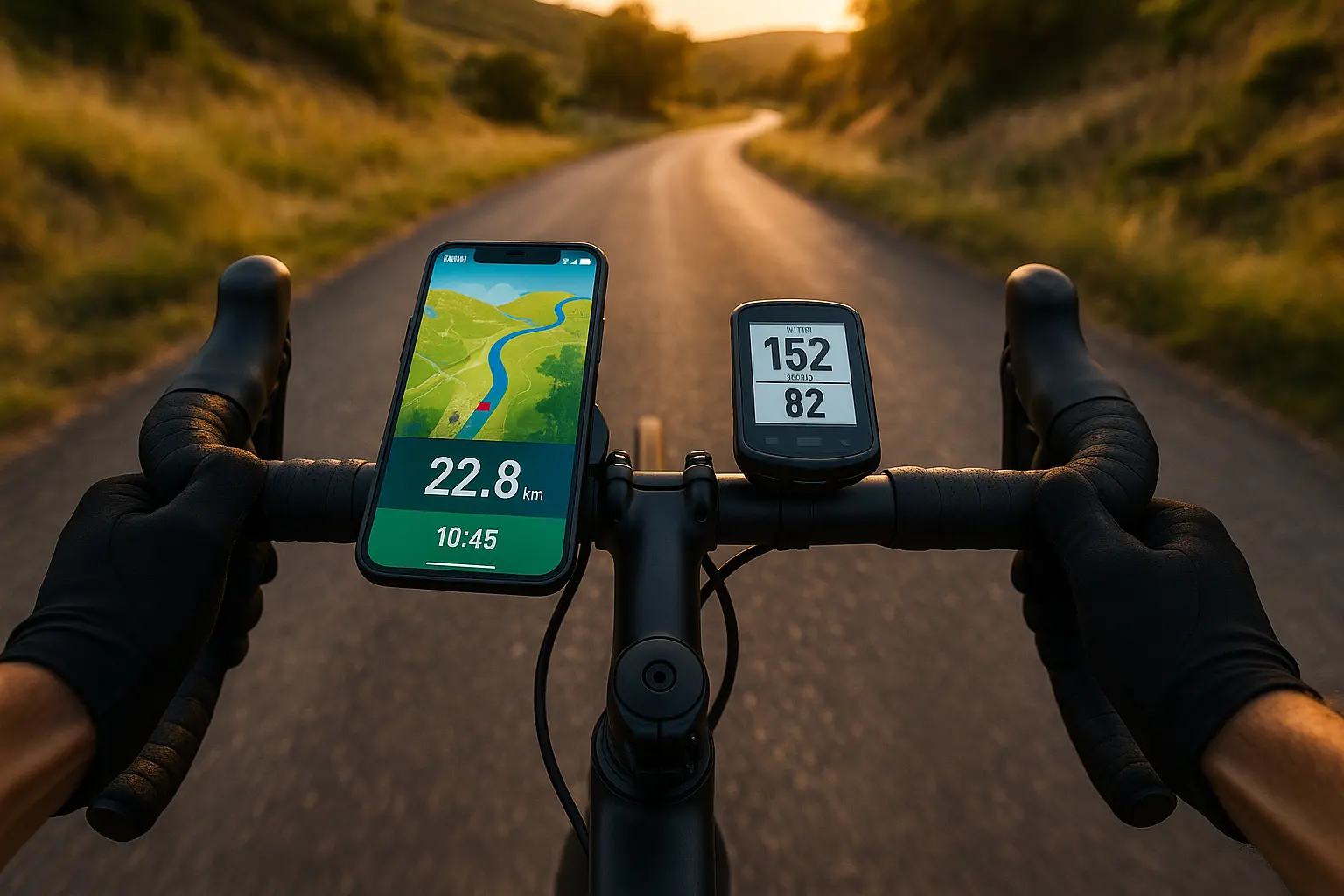
Struggling to choose between a bike computer vs phone for your rides? As a cycling enthusiast who’s tested both sides for years, I know the pain: phones drain battery quickly, struggle with durability in rain or constant vibrations, and lack dedicated computers’ reliability. But is your phone enough? This guide breaks down real-world battery life, navigation accuracy, and ruggedness testing—so you can pick the perfect tool for your specific riding style—racing, touring, or commuting. Discover key differences, exact numbers, and personal insights to decide what works best for your rides.
- Bike computer vs phone: which is the best for your rides in 2025?
- The fundamental choice: a dedicated tool vs a versatile device
- Battery life: the deciding factor for long rides
- Durability and mounting: can your phone handle the road?
- Data and accuracy: what really matters for training
- Bike computer vs phone: a head-to-head summary
- So, which one is right for you in 2025?
Bike computer vs phone: which is the best for your rides in 2025?
As a cyclist and developer who’s tested countless devices, I’ve seen the bike computer vs smartphone debate firsthand. For years, riders asked: “Can my phone replace a dedicated computer?” Today, the answer depends on your needs.
Dedicated units like Garmin Edge 530 ($300+) and Wahoo Elemnt Bolt ($250) excel in battery life (up to 5 days), waterproofing, and precise GPS. They connect to ANT+ sensors for heart rate, cadence, and power. But they’re costly and lack smartphone flexibility for maps or music.
Smartphones with apps like Komoot, Strava, and Google Maps offer larger screens and social features. For instance, Strava’s segment challenges and Zwift’s virtual rides enhance the experience, but the trade-off is shorter battery life. However, battery drains fast—often needing a $30 power bank for long rides. Phone mounts cost $20-70, and newer models lack ANT+ support, limiting sensor compatibility. Sunlight also makes screens hard to read during daytime rides.
BikeCompanion bridges this gap. It’s a GPS app that tracks rides, plans routes, and analyzes performance—all on your phone. No extra hardware needed. It offers offline maps and real-time navigation for remote areas, plus seamless sharing of routes with the cycling community. For casual riders, it’s a cost-effective solution. However, elite athletes may still prefer dedicated devices for precise data tracking. Let’s explore the details to find your perfect match.

The fundamental choice: a dedicated tool vs a versatile device
The dedicated bike computer: built for performance and simplicity
Dedicated computers like Garmin Edge 530 and Hammerhead Karoo 2 focus solely on cycling metrics. They show speed, cadence, and heart rate without distractions. Preloaded maps and customizable data fields simplify route planning. Secure mounts stay stable on rough terrain.
IPX7-rated for rain and trails. Battery lasts 20+ hours (solar models up to 10 days). Superior GPS accuracy ensures precise Strava segment tracking. They function reliably in cold temperatures where smartphones often fail.
Seamlessly connect to power meters, HR monitors, and SRAM AXS shifting systems. In races, data stays consistent with no app crashes. Lighter than smartphones with power banks, keeping handlebars clutter-free.
The smartphone: your all-in-one adventure partner
Smartphones like iPhone or Android offer versatility. Apps like Komoot and BikeCompanion provide detailed offline maps with trails, cafes, and elevation profiles. BikeCompanion offers turn-by-turn navigation; Komoot requires subscription for advanced features. GPS drains battery quickly—needs a 10,000mAh power bank for long rides.
Large screens aid navigation but suffer glare in sunlight. Touchscreens become unresponsive in rain or with gloves. Signal drops in forests or urban areas disrupt navigation.
Cost-effective for casual commutes but unreliable for serious training. Many riders carry both: phone for navigation, computer for metrics. For endurance events, dedicated computers ensure battery and signal reliability.
Battery life: the deciding factor for long rides
Why dedicated computers outlast phones
Dedicated bike computers like Garmin Edge use minimal power. Their displays and GPS consume far less energy than smartphones. The Edge 1050 lasts 20 hours per charge, while the Edge 840 offers 16 hours. Edge 1040’s solar charging extends battery life to five days for multi-day trips. Models like the Edge 530 also deliver 20 hours of reliable use. This reliability is crucial away from power sources. Unlike phones, they handle extreme temperatures without overheating—even in freezing conditions below 0°C, where smartphones often shut down completely.
Smartphones drain quickly during GPS use. An iPhone 13 loses 35% battery in four hours of cycling. Older models like the iPhone 11 can lose up to 50% due to battery degradation. Garmin devices use under 10% in the same period. This difference is critical for long rides. After two years, many phones hold only 80% of original capacity, making them unreliable for extended trips.
Coros Dura offers 120 hours of GPS runtime. Solar charging adds 2 hours per hour of sunlight. After 40 days with 65h use and 17% solar input, 18.7% battery remained. With an IP67 rating for water and dust resistance, it’s built for harsh conditions. Solar charging works best in direct sunlight, making it perfect for summer tours or desert crossings.
Managing your phone’s battery: strategies and solutions
Phone cycling needs careful battery management. A 15,000 mAh power bank adds 300-400g to your load, which can be tiring on long rides. Frequent recharging degrades battery life faster. Screen brightness and network connections drain battery, not GPS. Lower brightness or use dark mode to extend usage—especially effective on OLED screens where black pixels save energy.
BikeCompanion minimizes battery drain. The app includes a battery-saving mode that reduces screen refresh rate and limits background processes. Optimize battery life with BikeCompanion. Pair with an external mini-battery to double ride time. Users report up to 15 additional hours of usage with this combo.
Offline maps reduce network data usage. Turning off Wi-Fi and Bluetooth saves 5-10% battery. For longer trips, consider a phone mount with built-in battery. However, for serious multi-day expeditions, a dedicated device like the Coros Dura or Garmin Edge ensures uninterrupted navigation without the hassle of extra accessories. Nothing beats their reliability when every watt counts.
Durability and mounting: can your phone handle the road?
As a cyclist testing gear daily, durability is non-negotiable. Whether you’re riding through rain, extreme heat, or rough terrain, your device must perform reliably. Choosing between a smartphone app and a dedicated bike computer impacts safety, data accuracy, and overall ride experience. Let’s break down the real-world differences that matter most.
Built to last: the ruggedness of a bike computer
Dedicated bike computers like the Garmin Edge 530 or Wahoo Elemnt Bolt are engineered for cycling. With IPX7 or IP68 ratings, they withstand heavy rain, submersion, and impacts from potholes or crashes. They operate reliably from -10°C to 45°C, making them ideal for winter training or desert rides. Unlike smartphones, their screens remain visible in bright sunlight without glare.
Mounting systems like Quad Lock or Wahoo’s proprietary brackets ensure zero wobble on rough trails, even during high-speed descents. These devices are built to endure the toughest conditions cyclists face—no extra cases or accessories needed. For multi-day bikepacking trips, they preserve your phone’s battery for emergencies while tracking miles, elevation, and heart rate continuously.
Professional cyclists and adventurers trust dedicated computers for their consistent performance. Models like the Garmin Edge 1040 offer solar charging, extending battery life to five days. This reliability ensures you never lose critical data, even on the longest rides.
The risks for your smartphone: vibrations, weather, and crashes
Smartphones face serious vulnerabilities when mounted on bikes. Constant vibrations from rough roads can permanently damage the camera’s optical stabilization (OIS), leading to blurry photos and degraded performance. While solutions like Optiline’s Bicycle Dampener 2.0 ($49) help, they add cost and setup complexity.
- Permanent OIS damage from road vibrations
- Anti-vibration mounts increase expenses
- Waterproof cases reduce touchscreen sensitivity in rain
- Smartphones overheat above 35°C or shut down below 0°C
- Crashes often require $200+ screen repairs
GPS use drains smartphone batteries 20-30% per hour. A 6-hour ride demands a bulky power bank, adding weight and clutter. In freezing conditions, phones lose 50% battery in minutes or shut off entirely, while dedicated computers function flawlessly in sub-zero temps.
Even with protective cases, smartphones struggle in wet weather—touchscreens become unresponsive, and cases trap heat during summer rides. After a crash, a shattered phone screen costs far more to fix than a bike computer’s durable casing. For reliable, all-weather performance, dedicated computers remain the safer choice for serious cyclists.
Data and accuracy: what really matters for training
The precision of a barometric altimeter
Dedicated bike computers use barometric altimeters to measure atmospheric pressure changes. This provides far more accurate elevation data than GPS alone. GPS altitude errors range from 3.6 to 12.8 meters, making D+ calculations unreliable for serious training.
Barometric altimeters track small pressure changes precisely. This is crucial for climbers analyzing ascent performance. ANT+ connectivity ensures stable links with power meters, heart rate monitors, and other sensors, enhancing data reliability.
Barometric altimeters require periodic calibration to account for weather changes, but they remain the gold standard for elevation tracking. When properly calibrated, they can measure elevation changes as precise as 0.5 meters. Dedicated bike computers automatically adjust for weather shifts using GPS data, ensuring consistent D+ readings even during long climbs.
Phone sensors and app-based enhancements
Smartphones typically lack built-in barometers, relying solely on GPS for elevation. This leads to significant errors—up to 20%—during steep ascents. While apps like BikeCompanion use advanced algorithms to correct this, the hardware limitations mean they still fall short for professional training. For example, a 500m climb might be recorded as 400m, skewing performance analysis and training progress.
Features like Verified climbs ensure reliable ascent metrics. Bluetooth connectivity works well for sensor pairing. Casual riders may find smartphones sufficient, but serious athletes need dedicated devices for accurate performance tracking. Consistent data is key for progression.
ANT+ technology allows dedicated computers to connect to multiple sensors simultaneously—power meters, heart rate monitors, and speed/cadence sensors—without signal drops. Smartphones using Bluetooth may struggle with multiple connections, leading to data interruptions during critical training moments. This is especially problematic for athletes using advanced metrics.
Smartphones drain battery quickly during GPS use, especially in cold weather. Riders often need external power banks, adding weight and complexity. Dedicated bike computers typically offer 15+ hours of battery life, making them ideal for long adventures without extra gear.
Bike computer vs phone: a head-to-head summary
Cyclist and app tester: comparing smartphones vs dedicated bike computers. Pros and cons depend on your riding style. Casual riders prefer smartphone ease; athletes need reliability. This table compares cost, battery, durability, screen, navigation, data accuracy, versatility. Tested extensively. Dedicated computers last 15-40+ hours; smartphones drain fast, needing power banks. Dedicated computers are waterproof/shockproof; smartphones fragile. Dedicated screens handle sunlight better. Bike computers have reliable navigation; smartphones offer better maps/POI. Dedicated computers have better data accuracy with barometric altimeters. Smartphones versatile; bike computers cycling-focused. For rough terrain or long rides, dedicated computers are more reliable. Use this table to choose.
| Feature | Dedicated Bike Computer | Smartphone with App |
|---|---|---|
| Cost | Higher initial cost (€150 – €700+) | Low initial cost (you own the phone) + accessories (€50 – €150+) |
| Battery Life | Excellent (15-40+ hours), self-sufficient | Poor (drains phone battery), requires external pack for long rides |
| Durability | Very high (waterproof, shockproof, weatherproof) | Low (fragile, risk of vibration/water damage) |
| Screen Visibility | Optimized for direct sunlight | Can be poor in direct sunlight, screen glare |
| Navigation | Reliable, simple turn-by-turn | Excellent (large interactive maps, easy rerouting, POI search) |
| Data Accuracy | Very high (barometric altimeter, ANT+) | Good (GPS-based altitude can be inaccurate) |
| Versatility | Single-purpose, focused on cycling | Multi-purpose (maps, communication, camera, etc.) |
So, which one is right for you in 2025?
For the competitive and performance-focused cyclist
Dedicated bike computers like Garmin Edge 1050 deliver unmatched reliability. With up to 60 hours of battery life, they handle long races without draining your phone. Their sunlight-readable screens and waterproof design ensure accuracy in any condition. They use GPS, GLONASS, and Galileo for precise location tracking even in challenging terrain. For serious training, they’re indispensable.
They integrate seamlessly with power meters and heart rate monitors. Real-time metrics like cadence and power help optimize performance. Models like the Edge 1040 Solar even recharge under sunlight for extended rides, up to 100 hours in eco mode. No compromises for competitive cyclists.
Dedicated units like Wahoo Elemnt Bolt 3 offer compact, IPX7-rated designs without sacrificing functionality. They’re lightweight and built to withstand crashes better than smartphones.
For the adventure, gravel, and recreational rider
Smartphones shine for adventure riders. Apps like Komoot offer stunning maps with elevation profiles. Need to find a café or detour? Your phone handles it effortlessly. Download detailed offline maps for remote areas where cellular service is unavailable. Just use a sturdy mount and a power bank. This flexibility makes them ideal for gravel and bikepacking trips.
However, battery life is a concern. Most phones last only 5 hours during navigation. A 10,000mAh power bank solves this but adds bulk. For multi-day trips, pairing a phone with a portable solar charger ensures uninterrupted navigation. Still, for casual rides, the smartphone remains a top choice.
Smartphone mounts must be vibration-resistant to prevent damage. Also, cold weather can drain phone batteries faster. Apps like Ride with GPS integrate seamlessly with Strava for social sharing and route planning. But for most recreational riders, the benefits outweigh these minor challenges.
My personal take: why I built BikeCompanion
As a cyclist, I struggled between phone convenience and dedicated computer reliability. That’s why I created BikeCompanion. It harnesses smartphone power while solving key weaknesses.
That’s exactly why I created BikeCompanion. My goal was to build the ultimate bike computer app that harnesses the power of the smartphone while tackling its weaknesses.
BikeCompanion’s climb analysis breaks down each ascent into 100-meter segments, showing real-time gradient and elevation data to optimize pacing. The ghost rider feature lets you race against your personal bests, while group tracking keeps your ride partners connected.
BikeCompanion’s auto-dim feature extends battery life by 30% compared to standard GPS apps. With custom dashboards and seamless Strava sync, it’s the perfect all-in-one tool for every type of ride. Try it free and see how it transforms both performance and adventure. Join thousands of cyclists who trust our solution.
Choosing between a bike computer and phone depends on your rides. Dedicated devices excel in reliability and battery life for competition; smartphones shine for adventure with rich navigation. As a cyclist and developer, I built BikeCompanion to merge both worlds—smartphone convenience with pro-grade features. Try it and ride smarter!


