Haast Pass is a climb of 4.4 kilometers (hors catégorie). Haast Pass tops out at 451 m above sea level. It is located in n/a, West Coast, New Zealand / Aotearoa. The average gradient is 10.4% with a maximum of 19.7%. The climb has 460 meters of elevation gain.
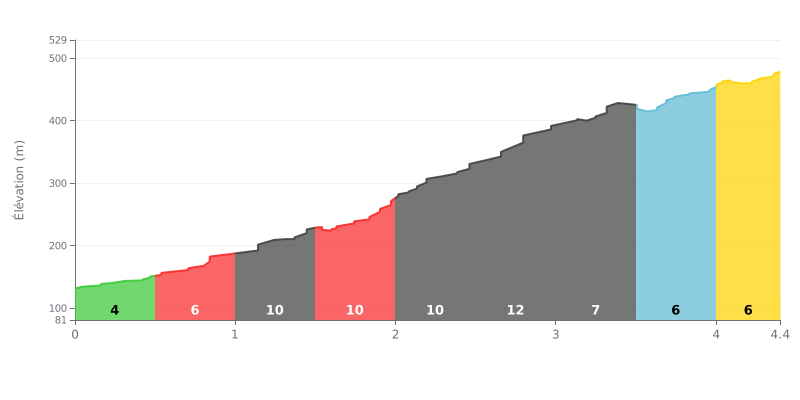
Difficulty breakdown: This 4.4 km HC climb is brutal because of its very steep average gradient (10.4%). The hardest part comes between km 2.0 and km 3.0, with a nasty 10% section lasting 500m, followed by a 12% stretch over another 500m. The start is more manageable, and the finish offers a bit of respite with 6-7% gradients.
How to manage the effort:
1. Pace yourself from the bottom: Resist the urge to go out too hard in the first kilometres (4-7%). You'll blow up your legs before you reach the steepest part.
2. Prepare for the wall (KM 2.0-3.0): When you hit the 12% section, ease off the pace a touch and select an appropriate gear so you can keep a smooth, steady cadence.
3. Save something for the final stretch: Use the last three kilometres (6-7% gradient) to recover a little and hold your speed all the way to the summit.
For riders who've climbed it, the Haast Pass is much more than just a grind up a hill; it's an intense sensory experience. They describe a road snaking through wild country, where the scenery keeps changing: churning rivers, lush rainforest thick with ferns, and views of snow-capped peaks. The soundtrack is nature itself, including the chorus of cicadas.
Much of the appeal lies in the many possible stops along the way. Riders stress that you need to be ready to pull over often for short walks to spectacular waterfalls such as Roaring Billy Falls, Thunder Creek Falls or Fantail Falls. The walk to the Blue Pools, the most popular and a bit longer, is also a must-do for many cyclists.
Riders also flag a crucial logistics point: there are no shops, cafés or petrol stations between Haast and Makaroa. Be sure to carry food and water before you set off up the climb. Drinking water and toilets are available at a campground roughly halfway.
Weather can be changeable, with frequent rain reported by some, but the pass is still stunning even when it's wet. The road itself is described as being in good condition, but its popularity with tour buses and cars means cyclists share the tarmac with plenty of traffic.
4.4 km • 460 m D+
VAM: average climbing speed, based on elevation gain


Join thousands of cycling fans! Plan your rides, record your performance, track your progress and discover the finest climbs.
Live climb profile to pace your effort all the way to the top.