Paso Socompa is a climb of 16.3 kilometers (category 2). Paso Socompa tops out at 3,878 m above sea level. It is located in Antofagasta, Región de Antofagasta, Chile. The average gradient is 2.9% with a maximum of 8.2%. The climb has 475 meters of elevation gain.
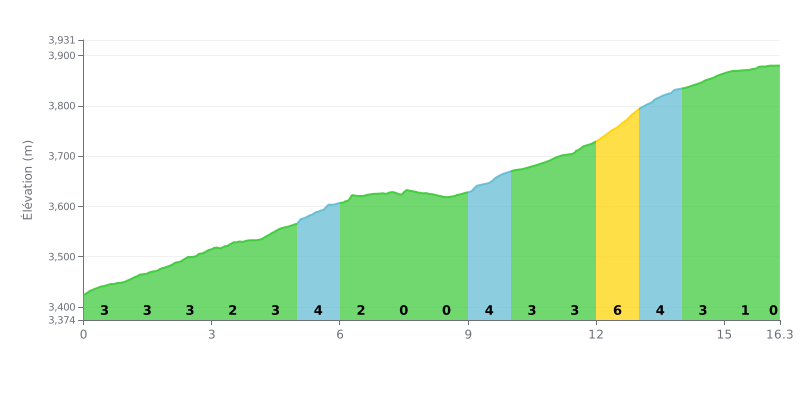
Difficulty analysis: This 2nd category climb is moderately hard, with an average gradient of 2.9%. The difficulty lies in its irregularity: a nearly flat section between km 7 and 9, followed by a steeper part peaking at 7% around km 12.0-13.0. The elevation gain is unevenly distributed, so you need to manage your effort carefully.
Pacing tips:
1. Handle the changes in gradient: Make the most of the two flat kilometers (7-9) to recover actively before the hardest part.
2. Prepare for the spike: Tackle the 7% kilometer (12-13) with a comfortable gear and a steady cadence to avoid blowing up.
3. Keep a steady rhythm: Hold a consistent power output on the 3-4% sections, which make up most of the climb, to conserve your energy.
For the cyclists who have climbed it, the ascent of the Paso Socompa is an experience marked by a striking duality. On one hand, the road runs alongside an active railway line, which means heavy road traffic, especially trucks, creating noise and requiring constant vigilance.
Despite this human presence, riders' accounts speak of raw, magical Andean scenery. The road snakes through vast mineral expanses, giving a sense of isolation and grandeur that more than makes up for the hassle of the traffic.
The key stage, described as a real highlight, is crossing the border between Chile and Argentina. Reaching this highest point is a real achievement for cyclists, rewarding the effort put in within such a unique setting.
The information available on this pass is praised as excellent and invaluable by those who have attempted it, helping them prepare well for the specific conditions of this one-of-a-kind climb.
16.3 km • 475 m D+
VAM: average climbing speed, based on elevation gain


Join thousands of cycling fans! Plan your rides, record your performance, track your progress and discover the finest climbs.
Live climb profile to pace your effort all the way to the top.